Table of Contents
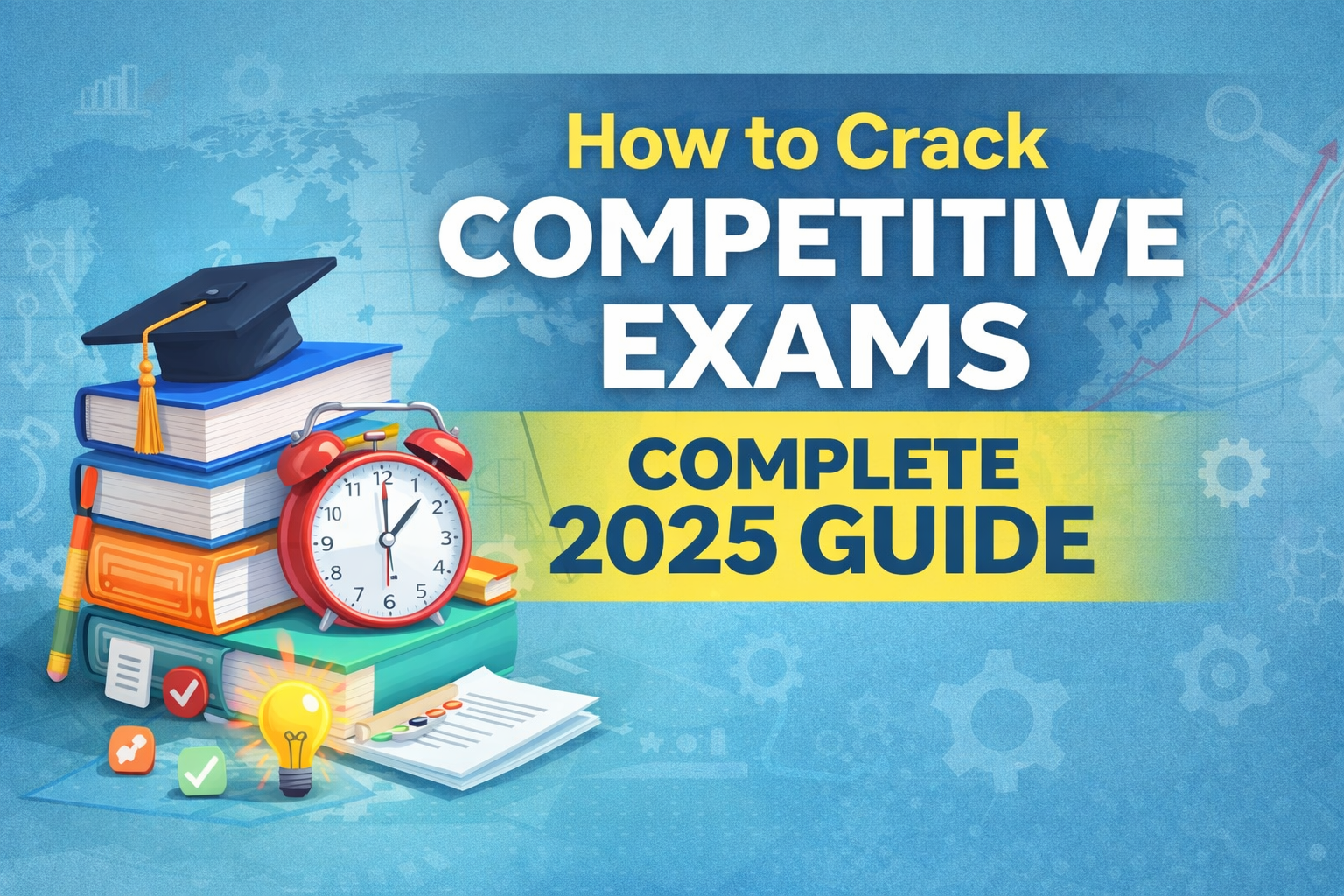
Competitive exams are a major milestone in every student’s academic journey. Whether you are preparing for JEE, NEET, UPSC, GATE, SSC, Banking, or Board Exams, the pressure, competition, and expectations can feel overwhelming. However, success in competitive exams is not about luck—it is about strategy, consistency, and smart preparation.
This complete 2025 guide will help you understand how to prepare effectively, manage time, choose the right resources, and build the mindset needed to crack competitive exams with confidence.
Understanding the how to crack cpmetative Exam Landscape
Before starting your preparation, it is crucial to understand the exam you are targeting. Each competitive exam has its own structure, difficulty level, and evaluation method.
What You Should Do First:
- Carefully read the official syllabus and exam guidelines
- Understand the exam pattern, marking scheme, and question types
- Analyze previous years’ question papers to identify trends
- Research cut-off marks and selection ratio
- Study career opportunities after qualifying
This clarity will help you avoid unnecessary topics and focus only on what truly matters.
Developing a Structured Study Plan
A well-planned study strategy separates successful candidates from average ones. Random studying leads to confusion and burnout.
Ideal Study Plan Phases:
Phase 1: Foundation Building
Focus on understanding basic concepts clearly.
Phase 2: Topic Mastery
Go deep into each subject and strengthen conceptual clarity.
Phase 3: Integration & Practice
Solve mixed questions and connect concepts across subjects.
Phase 4: Revision & Mock Tests
Polish weak areas and build exam confidence.
Pro Tip:
- Allocate time based on subject weightage
- Use a weekly and monthly study calendar
- Track progress using apps or simple checklists
Mastering Time Management
Time management is the backbone of competitive exam success. Studying longer hours does not guarantee results—studying smarter does.
Practical Time Management Tips:
- Set daily, weekly, and monthly goals
- Use the Pomodoro Technique (45–50 min study + 10 min break)
- Study difficult topics during your peak productivity hours
- Create a distraction-free study environment
- Balance studies with exercise and rest
- Sleep at least 7–8 hours daily
Consistency beats last-minute cramming every time.
Choosing the Right Study Resources
Too many resources can confuse you. Smart aspirants use limited but high-quality material.
Best Study Resources:
- NCERT textbooks for fundamentals
- Standard reference books recommended by toppers
- Online courses and video lectures
- Previous year question papers
- Mock test series
- Revision apps and short notes
👉 Golden Rule:
Choose 2–3 trusted resources per subject and master them completely.
The Power of Practice and Revision
Knowledge without practice is incomplete. Practice transforms theory into performance.
Why Practice Matters:
- Improves speed and accuracy
- Builds problem-solving skills
- Strengthens memory through revision
- Reduces exam anxiety
- Improves time management
Effective Practice Strategy:
- Solve topic-wise questions
- Take regular mini-tests
- Attempt full-length mock tests
- Analyze mistakes carefully
- Revise weak areas and retest
Analyzing Mock Test Performance
Mock tests are only useful if you analyze them properly.
What to Analyze:
- Subject-wise accuracy
- Time spent per section
- Repeated mistakes
- Conceptual vs careless errors
- Performance improvement over time
Modify your study plan based on mock test insights. This step alone can boost your score significantly.
Building Exam Temperament
Cracking competitive exams is not just about knowledge—it’s about handling pressure.
How to Build Exam Temperament:
- Take mocks in real exam conditions
- Practice strict time limits
- Train your mind to stay calm
- Avoid panic during tough questions
- Develop self-confidence through preparation
Mental strength often decides the final outcome.
Nutrition and Physical Health
Ignoring health during exam preparation is a big mistake.
Healthy Habits for Aspirants:
- Eat a balanced, nutritious diet
- Drink plenty of water
- Exercise or walk daily
- Avoid excessive caffeine
- Practice meditation or yoga
- Maintain a regular sleep schedule
A healthy body supports a sharp and focused mind.
Seeking Help and Guidance
You don’t have to do everything alone.
When to Seek Help:
- From teachers or mentors for difficult topics
- Coaching institutes for structured preparation
- Seniors who have cracked the exam
- Study groups for discussion and motivation
- Online forums for doubt-solving
Guidance at the right time can save months of confusion.
Managing Stress and Staying Motivated
Competitive exam preparation is a marathon, not a sprint.
Stay Motivated By:
- Setting short-term achievable goals
- Celebrating small wins
- Taking planned breaks
- Avoiding unhealthy comparisons
- Staying connected with supportive people
- Visualizing your end goal
Failures are part of success—learn, adapt, and move forward.
Exam Day Strategy
On the final day, your mindset matters the most.
Exam Day Checklist:
- Reach the exam center early
- Read the paper carefully
- Attempt easy questions first
- Manage time section-wise
- Avoid getting stuck on one question
- Review answers if time permits
- Stay calm and confident
Trust your preparation.
Conclusion
Cracking competitive exams in 2025 requires a balanced approach—strong concepts, smart strategy, consistent practice, and mental resilience. There are no shortcuts, but disciplined effort always pays off.
Every aspirant’s journey is unique. Customize these strategies according to your learning style, stay focused on your goal, and believe in yourself. With the right mindset and preparation, success is not just possible—it is inevitable.
All the best for your competitive exam journey! 🚀
Python data science course : https://updateindia.blog/python-for-data-science-ai-development/
resources : https://aimstors.com/resources